

Introduction
Audits play a pretty critical role in keeping operational excellence, compliance, and safety on track across most modern organizations. Whether someone is looking at maintenance work, facility conditions, security controls, or the regulatory requirements, audits help companies spot areas that probably need attention. Still, the real value of an audit isn’t in just finding problems, not really. It’s in how well those discoveries get turned into corrective actions , and then actually followed.
Many organizations conduct audits regularly but struggle to convert observations into meaningful improvements. Audit reports get written, passed around, and stored, but the actual underlying issues stay there, unresolved for weeks or even months. That kind of gap creates operational risks and reduces the overall effectiveness of the auditing process.
For storage operations, where asset reliability and customer trust are basically tied together, quick corrective action is essential. Converting audit findings into actionable plans helps organizations move beyond compliance and build a kind of continuous improvement.
Audits are essential for maintaining compliance, safety, and operational efficiency by identifying areas that require improvement. However, their true value lies not in uncovering issues but in translating findings into effective corrective actions. Many organizations struggle to act on audit observations, leaving underlying problems unresolved and increasing operational risks.
In storage operations, where asset reliability and customer trust are critical, turning audit findings into actionable corrective plans is essential for continuous improvement and long-term operational excellence.
Why Audit Findings Often Fail to Drive Change
Finding an issue is the very first step in the improvement process. After the audit is completedmany organizations encounter challenges.
Common challenges include:
- Unclear ownership of corrective actions
- Delayed communication between auditors and maintenance teams
- Lack of prioritization for identified issues
- Inconsistent follow-up procedures
- Limited visibility into resolution progress
According to guidance from organizations such as the Institute of Internal Auditors (IIA) and ISO 19011 auditing standards, effective audits should not only identify risks but also support corrective actions that address root causes rather than symptoms.
Without a structured response process, audit findings can become repetitive issues that appear in multiple audit cycles.
The Shift from Findings to Action
An effective corrective plan begins immediately after an issue is identified. Rather than considering audits as standalone events, organizations should view them as part of a larger improvement workflow.
The most successful organizations tend to use a fairly straightforward progression:
Identify → Assess → Assign → Resolve → Verify
This way ensures that findings are not simply documented but actively managed until resolution is confirmed.
In storage environments, this workflow becomes particularly valuable because operational issues often have direct consequences for security, maintenance costs, and customer satisfaction.
Integrating Work Orders into the Audit Process
One of the most effective ways to accelerate corrective actions is by connecting audits directly to work order management.
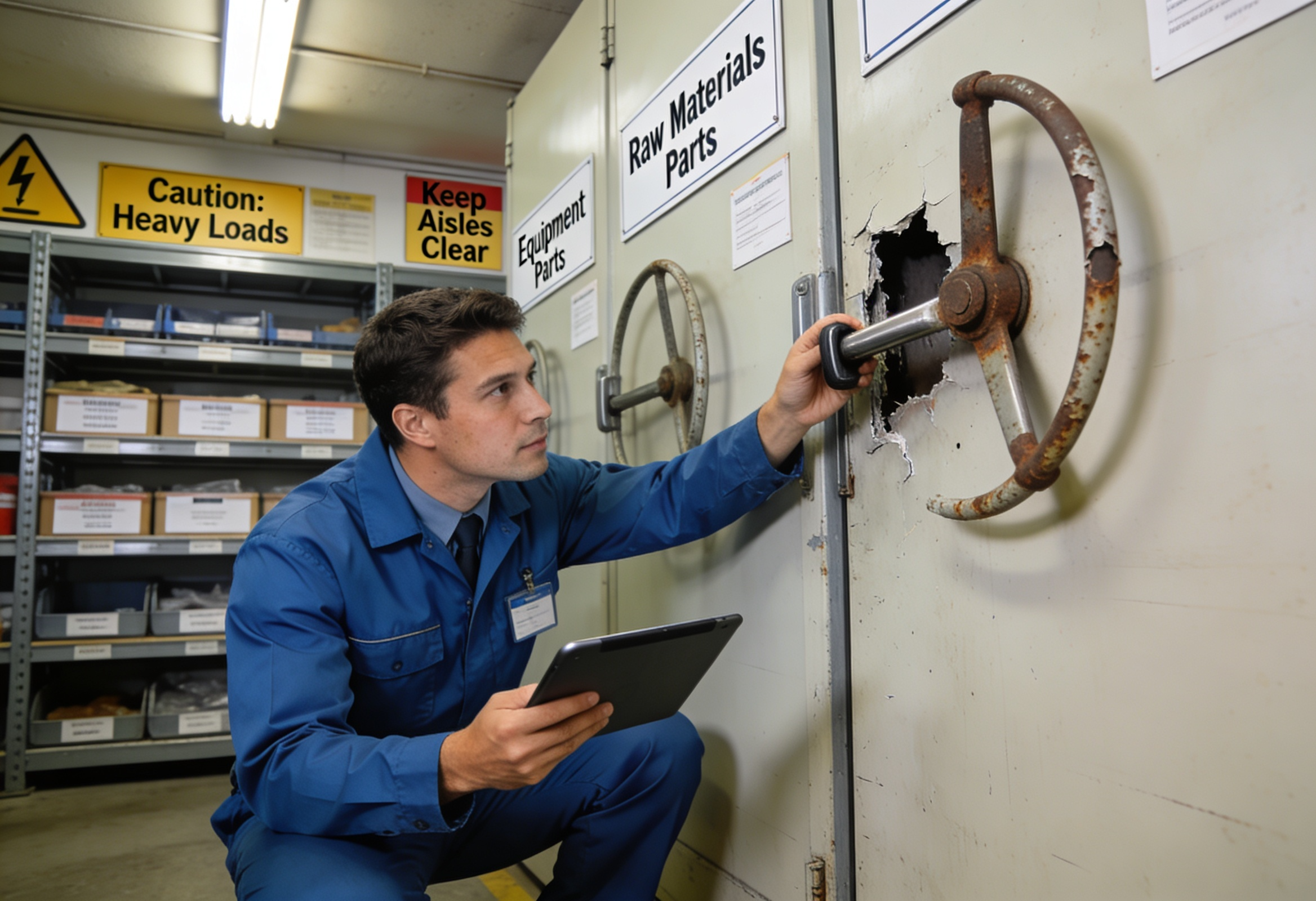
In many storage organizations, auditors are able to create work orders while the audit is still happening, whenever they spot something that truly needs action.
For example, an auditor inspecting a storage location may discover:
- A damaged door
- A malfunctioning lock
- Deteriorating seals
- Safety hazards
- Lighting failures
For example, when an auditor is just doing a quick look at a storage location, they might see challenges like A damaged door, A lock that is not working properly, Seals that are getting worse, in time, Safety hazards that feel unavoidable, or Lighting failures that keep happening
Rather than waiting for a separate reporting process, the auditor can instantly generate a work order and assign it to the appropriate maintenance team.
This usually brings a few clear advantages: faster response times, fewer communication gaps, and clearer ownership. It also supports better issue tracking and generally improves audit effectiveness.
The ability to create corrective actions while conducting the audit significantly shortens the time between problem identification and resolution.
Creating Effective Corrective Action Plans
A corrective action plan should give a clear roadmap for resolution. Vague recommendations often lead to confusion and delays.
An effective plan should include:
- A detailed description of the issue
- Root cause analysis
- Assigned responsibility
- Required actions
- Completion deadlines
- Verification procedures
- A detailed description of the issue, the real symptom, not just the label
- Root cause analysis, digging for why it happened in the first place
- Assigned responsibility, meaning who owns it and who follows through
- Required actions, step by step, or at least clearly enough to execute
- Completion deadlines, with dates that are realistic and agreed
- Verification procedures, to confirm it’s fixed, not just “hopefully” fixed
For example, instead of stating: “Repair damaged door.”
A stronger corrective action would be:
“Replace damaged door hinges, inspect locking mechanism, assign maintenance technician, complete repairs within seven days, and verify functionality through follow-up inspection.”
This level of specificity improves accountability and execution
Measuring Success Through Follow-Up Audits
Corrective actions should not be considered complete simply because a work order is closed.
Follow-up audits play a critical role in verifying (checking)effectiveness. These audits confirm whether:
- The issue has been resolved
- The root cause has been addressed
- Similar risks remain elsewhere
- Additional corrective actions are necessary
Without verification, organizations risk treating symptoms while underlying problems continue to exist.
Continuous monitoring ensures that improvements are sustainable rather than temporary.
Without verification, organizations can end up treating symptoms , while the real underlying problems keep existing and quietly cause trouble later on.
Also continuous monitoring helps make sure the improvements stay in place, rather than becoming temporary fixes that fade out after a while.
Building a Culture of Continuous Improvement
Many organizations see audits as compliance stuff. Yet the most successful businesses treat audits as chances for day-to-day operational enhancement.
If audit findings keep turning into corrective actions, then, after a while, some durable results show up, like Lower operational risks, better asset dependability, more efficient resource utilization, improved compliance results, and higher employee accountability
Over time, this creates a proactive culture, where small issues get handled before they turn into major operational complications.
Conclusion
The effectiveness of an audit is ultimately measured not by the number of findings it uncovers but by the actions that follow. Organizations that successfully convert audit observations into structured corrective plans gain greater control over operational risks, compliance requirements, and maintenance performance.
In storage operations, integrating work order creation directly into the audit process provides a powerful advantage. Auditors can identify issues, generate corrective actions, and set responsibilities on the spot, which cuts down on delays and makes accountability feel more direct.
When you put together risk-based prioritization, clear ownership, detailed action plans, and then follow-up verification, audits don’t stay just a basic inspection task. They can become something that really pushes continuous operational improvement In today’s increasingly complex business environment, the ability to turn findings into action is what separates effective auditing programs from ineffective ones.


